Surgery doesn’t always need to be your first line of defense. Many spine injuries improve with therapy, guided exercise, and proper care. In fact, most people heal through conservative treatment before needing spine surgery recovery plans. Starting with simple care can reduce pain and help you move better. The good news is, many people avoid surgery this way.
At Physicians Group, LLC, we’ll help you explore safer options before surgery. We provide imaging, therapy, chiropractic care, and medical exams to find the cause of pain. Then, we build a clear plan to help you heal safely and regain movement after an accident.
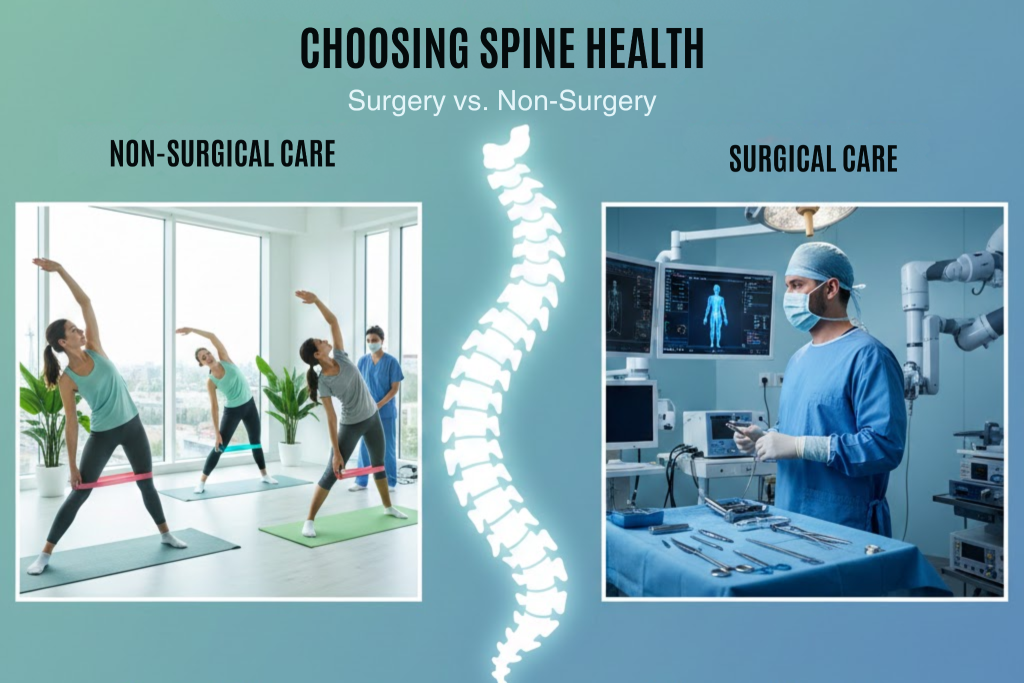
What Factors Help You Decide Between Spine Surgery and Non-Surgical Treatment?
Your treatment plan depends on your symptoms, test results, and how your body responds to care. In most cases, doctors start with simple treatments first. These steps may include exercise, therapy, and posture changes.
Because of this, many people improve without surgery. However, surgery may help when nerve pressure or spine instability causes lasting problems.
It’s a lot to process after an accident. And that’s okay. Clear information can help you make the right choice for your health.
Below are key factors that help guide the decision.
1. Quality of Life
Your daily comfort matters a lot. Back pain can affect sleep, work, and simple tasks.
In many cases, gentle care improves daily life. Stretching, guided exercise, and therapy help support the spine. As a result, many people move easier and feel less pain.
However, some spine problems affect life more. For example, strong nerve pressure can cause leg numbness or weakness. When that happens, surgery may help relieve pressure faster.
2. Symptom Severity
Your symptoms also guide the next step. Mild pain often improves with steady care and time.
Doctors often suggest rest, safe movement, and strengthening exercises first. These steps protect the spine and support healing.
However, some symptoms may signal a more complex issue. For example, ongoing numbness, weakness, or loss of control needs quick medical care.
3. Activity Limits
Your ability to move also matters. Back pain may limit walking, standing, or working.
In many cases, therapy and exercise help restore movement. Over time, people often return to normal daily activities.
But if pain continues to limit your routine, surgery may help improve movement. In that case, your doctor will explain what spine surgery recovery may look like.
When Is Spine Surgery Needed for Herniated Discs or Spinal Stenosis?
In most cases, doctors try simple care first. But sometimes pain does not improve. When that happens, surgery may help protect the spine and nerves.
For example, strong nerve pressure may cause leg numbness, weakness, or trouble walking. These signs may mean the nerves need fast relief. So, doctors may suggest surgery to reduce pressure.
Doctors also check MRI or CT scans. These images show problems inside the spine. They may show a large disc tear or tight space around nerves. In these cases, surgery may support herniated disc treatment or spinal stenosis treatment.
After surgery, careful rehab supports spine surgery recovery. Step by step, this care helps you move safely again.

Which Nonsurgical Options Offer Relief From Chronic Back Pain?
You have many ways to ease chronic back pain without surgery. In most cases, simple care works well. These treatments relax tight muscles and calm irritated nerves. They also help protect your spine over time. Because of this, many people feel better without surgery. And the good news is that these options are safe and easy to add to daily life.
Still, healing takes time. Pain after an accident can feel stressful. It’s a lot to deal with. But steady care often helps your body recover and move better again.
Below are common options that help reduce back pain.
Physical Therapy
Physical therapy helps your back grow stronger. It focuses on the muscles that support your spine. Strong muscles help your body move with less strain.
A therapist will guide you through safe stretches and exercises. You will also learn better ways to sit, stand, and lift. These steps support physical therapy for back pain and protect your spine.
Over time, stronger core muscles help stabilize your back. As a result, many people notice fewer pain flare-ups. Daily tasks may also feel easier and safer.
Natural Pain Relief
Many people also try natural back pain relief methods. These methods help your body relax and reduce stress.
For example, slow breathing and meditation calm the nervous system. Lower stress often helps lower pain signals. Gentle yoga can also help your body stay flexible. It improves posture and supports smoother movement.
With regular practice, many people feel less stiffness during the day. These simple habits also help your body stay balanced.
Anti-Inflammatory Diet
Food can also affect how your body handles pain. Some foods help reduce inflammation in the body.
Fish, nuts, and leafy greens contain omega-3 fats. These nutrients help calm irritated tissues and nerves. At the same time, eating less sugar and fewer processed foods may help.
Even small food changes can improve daily comfort.
Chiropractic Care and Lifestyle Changes
Many people also try chiropractic for back pain. Chiropractors use gentle adjustments to help the spine move better. When joints move well, pressure on nerves may decrease.
Daily habits also play a big role. Walking, light stretching, and good posture protect your spine. These habits also support healing during spine surgery recovery if surgery becomes necessary later.
What are the Differences in Recovery Times Between Surgical and Non-Surgical Spine Treatments?
Your recovery time depends on how serious your spine injury is. It also depends on how your body heals. In most cases, doctors start with simple care first. These treatments often help reduce pain and improve movement.
When you understand your options, it’s easier to choose the right care for your needs.
Surgical Treatment Options
Surgery fixes damage inside the spine. Doctors may suggest it when pain does not improve. They may also recommend it when nerves feel strong pressure.
Here are common spine surgeries:
- Laminectomy: The doctor removes a small bone piece. This step helps reduce nerve pressure.
- Microdiscectomy: The doctor removes the damaged disc part. This helps lower nerve pain.
- Spinal Fusion: The doctor joins two spine bones. This helps keep the spine stable.
- Decompression Surgery: The doctor creates more space for nerves. This helps ease pressure.
However, surgery recovery takes time. Many people heal over several weeks or months. While surgery is effective, it’s not always needed for less severe issues. During recovery time, light movement and therapy help the body heal. A clear rehab plan supports safe spine surgery recovery.
Non-Surgical Treatment Options
Doctors often start with simple care before surgery. These treatments are gentle and easy to try. They help when back pain comes from tight muscles, disc strain, or poor posture. They can also calm swollen nerves. Because of this, many people feel better with steady care. And the good news is that these steps fit into daily life.
Common non-surgical options include:
- Natural remedies: Heat, ice, and massage help relax tight muscles. Good posture also helps protect your spine.
- Movement therapy: Stretching and simple exercises help your back grow stronger. Strong muscles support the spine.
- Injections: Doctors may use shots to calm swelling near nerves. This can help you move with less pain.
- Laser or electrical therapy: These treatments help reduce nerve pain and support healing.
These treatments are used for management, maintenance, and can help patients feel quick relief. They may also help prepare your body for spine surgery recovery if surgery becomes needed later.
Which At-Home Exercises and Lifestyle Habits Support Spine Health?
Back pain is common after a crash or fall. So, it helps to care for your spine early. Simple movement can help your back stay strong. It also helps your blood flow better. As a result, your spine stays more stable.
Back pain can feel stressful. And that’s okay. Small daily habits can help your back feel better.
For example, light stretching helps loosen tight muscles. Also, short walks keep your back active. Good posture helps reduce strain on your spine. Over time, strong core muscles support your back and improve balance.
At the same time, these healthy habits protect your spine long term. They can also help if you ever need spine surgery recovery later.
So, below are five simple movements you can try at home to help protect your back.

Start Living Pain-Free Again With The Support Physicians Group, LLC Provides
Living with back or neck pain can make your whole day harder. You may hurt when you sit, stand, walk, or sleep. So, even small tasks can feel like a lot. That’s frustrating, and that’s okay. You deserve real help and a clear plan.
At Physicians Group, LLC, we care for people after car crashes, slip and falls, and other injuries. We offer medical evaluations, imaging, chiropractic care, pain care, and physical therapy in one place. Because of this, you get answers faster and treatment that fits your needs. Our team works to ease pain, improve movement, and support long-term healing.
We also guide you if your care may include spine surgery recovery later on. So, you won’t have to figure it out alone. Call us today and schedule your appointment.
FAQs
How can I tell if my pain is from a disc or a muscle?
Disc pain often shoots into your legs or arms and worsens when sitting or bending. Muscle pain stays in one spot and eases with movement. A specialist confirms the source through an exam and imaging, which helps you choose the safest and most effective treatment path.
How long should I try conservative care before surgery?
Most patients try non-surgical care for several weeks to a few months. If pain persists, weakness develops, or nerve pressure worsens, surgery may become the safer option. With a complete evaluation, your specialist can guide you on the right timing and help you avoid unnecessary delays in relief.
Can lifestyle habits prevent my back pain from worsening?
Yes. Good posture, regular stretching, and low-impact exercise reduce stress on your spine and support stability. These simple habits also improve blood flow and protect healing tissues. When combined with professional care, lifestyle changes help you maintain progress and lower your risk of recurring pain flare-ups.
What imaging tests help diagnose spine problems?
X-rays show bone alignment, while MRI scans reveal disc issues, nerve pressure, and soft-tissue changes. CT scans offer more detail when needed. Each test provides different information, and your specialist chooses the most helpful option to guide safe and effective treatment planning for your condition.
Are minimally invasive surgeries an option for most patients?
Many patients qualify for minimally invasive spine surgery, especially for herniated discs or early stenosis. These procedures use smaller incisions and reduce tissue disruption, which supports quicker recovery. Your eligibility depends on imaging results and symptom patterns, so a detailed evaluation helps determine the best surgical approach.
When can I return to normal activities after treatment?
Most nonsurgical treatments allow you to remain active with minor adjustments. Surgical recovery takes longer but generally improves with guided rehabilitation. Your timeline depends on your procedure, symptoms, and strength. Your specialist will help you set safe goals and return to daily routines at the right pace.